Make a Hybrid Battery Last Longer: 6 Arizona Habits
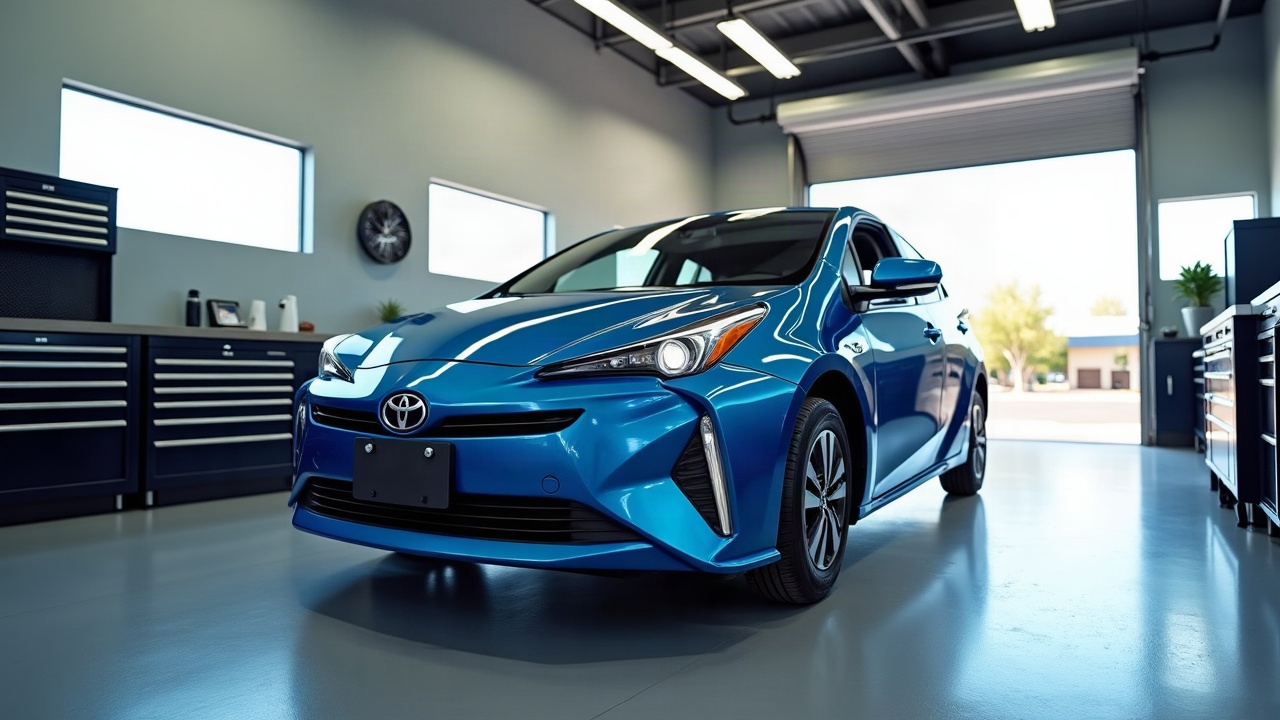
Six driving and parking habits that add years to a hybrid pack — and why Phoenix heat shortens the usual 10–15 year life to closer to 8–10.
A nickel-metal-hydride hybrid pack that lives in a mild coastal climate often runs 12–15 years; in Phoenix we at Healthy Hybrid routinely see the same pack fail between year 8 and year 11. Heat is the single biggest factor you can't change, but there are six habits that measurably slow the decline — and all of them come down to keeping cell temperature and cell imbalance down.
Here's what actually matters, and why.
What actually kills a hybrid battery?
Two things, almost always: heat and imbalance.
Heat accelerates the chemical breakdown inside each cell. As a rough rule for NiMH chemistry, every sustained 15°F rise roughly halves calendar life. A pack that spends four months a year at 110°F ambient is aging on a different clock than one in Oregon.
Imbalance is the second killer, and it's the one that triggers codes. A pack is 28 modules (Gen 2/Gen 3 Prius) or 34 (older Camry Hybrid) wired in series. The computer can only charge and discharge the whole string at once, so when one module weakens, it gets pushed harder than its neighbours every single cycle. That gap widens until the hybrid ECU throws P0A80 or a P3011–P3024 "battery block becomes weak" code.
Every habit below targets one of those two things.
The six habits, and what each one buys you
| Habit | What it prevents | Why it matters more in Arizona |
|---|---|---|
| Park in shade or a garage | Soak heat after shutdown | Cabin air hits 140°F+; the pack sits in that air with no fan running |
| Keep the battery vent clear | Fan starvation, hot spots | Dust and pet hair clog the intake screen faster here |
| Moderate acceleration | High-current heating | Less margin to shed heat when ambient is already 105°F |
| Avoid long storage at full or empty charge | Cell stress and self-discharge drift | Heat multiplies self-discharge, so a parked car drifts out of balance faster |
| Take a longer drive weekly | Narrow-band cycling, imbalance | Short errand trips are the norm in metro Phoenix sprawl |
| Keep the 12V battery healthy | Low-voltage faults and hard starts | AZ heat kills 12V batteries in 2–3 years, not 5 |
1. Where you park is a real variable
The hybrid pack has no active cooling once the car is off. On a 110°F day, a car parked in open sun reaches an interior temperature far above ambient, and the pack soaks in that heat for hours. Covered parking at work, a garage at home, or even the shaded side of a lot genuinely changes the average temperature the cells live at over a decade.
This is the cheapest thing on the list and probably the most effective.
2. Keep the intake vent clear — then actually check it
Most Toyota and Lexus hybrids pull cabin air across the pack through a vent near the rear seat or in the side trim of the trunk area. Block it with luggage, a cargo organiser, a dog bed or a child seat base and the fan is pulling against a wall.
Arizona dust loads that intake screen faster than almost anywhere else. Look at your vent. If you can see a grey mat of lint on the screen, your fan is working harder and moving less air than it should. Keeping cargo off it and the screen visibly clear costs you nothing.
3. Accelerate like you have somewhere to be, not something to prove
Current generates heat in proportion to the square of the current. Doubling the draw doesn't double the heating, it roughly quadruples it. Hard launches from every light, especially in summer, put the pack through its highest-heat moments at the worst time of year.
This isn't about driving slowly. It's about not treating the electric motor as a drag-strip assist. Smooth throttle, early lift, and letting regen do the braking keeps peak current and peak temperature lower.
4. Don't leave the car parked for weeks at either extreme
If you're leaving town for a month, the pack will self-discharge while the car sits, and heat speeds that up. Weak modules self-discharge fastest, which is exactly how a pack that was fine in May throws a code in July after a trip. If a car is going to sit, parking it in a garage and driving it for 20 minutes every couple of weeks is far better than leaving it baking in a driveway all summer.
For plug-in models like the Prius Prime, avoid leaving it sitting at 100% charge in the heat for days on end. Charge it when you're going to use it.
5. One longer drive a week
Short trips keep the pack cycling in a narrow state-of-charge band and never give the system a chance to run a full charge-discharge sweep. Over years, that lets individual modules drift apart without ever being exercised enough to show it. A 25–30 minute continuous drive once a week, ideally with some highway in it, keeps the whole string working across a wider range.
If your car never goes further than the grocery store and school pickup, it's the car most likely to surprise you.
6. Replace the 12V before it gets desperate
A failing 12V battery doesn't kill a hybrid pack, but it causes a cascade of strange faults, failed startups, and codes that look like hybrid problems. In Phoenix heat, 12V batteries commonly last 2–3 years instead of 5. Ours run $100 to $400 depending on the vehicle.
Does reconditioning help, or is it marketing?
It helps when the pack is still fundamentally healthy. Annual hybrid battery service means discharging and recharging the pack under controlled conditions to pull weak modules back toward the group, then measuring every module so you know where you stand. On a pack that's drifting but not failing, it buys time and tells you which modules are headed out.
It will not resurrect a pack with a shorted or dead module. If you're already seeing the red triangle or a stored P0A80, you're past the point where balancing fixes it, and you're looking at repair or replacement instead. Our set prices for Prius and CT200h are $600 installed at our shop for a rebuilt pack with a 3-month warranty, $1,250 for a rebuilt pack with 1 year, and $2,250 for a new aftermarket pack with 4 years — $850, $1,500 and $2,500 if we come to you. Other models vary on install labour.
If your mileage is dropping, the engine is running more than it used to, or the state-of-charge bars are swinging fast between full and empty, book a hybrid battery diagnostic at /schedule or call Healthy Hybrid at 833-995-7966 and we'll measure the pack module by module.