Used Camry Hybrid: 7 Battery Checks Before You Buy
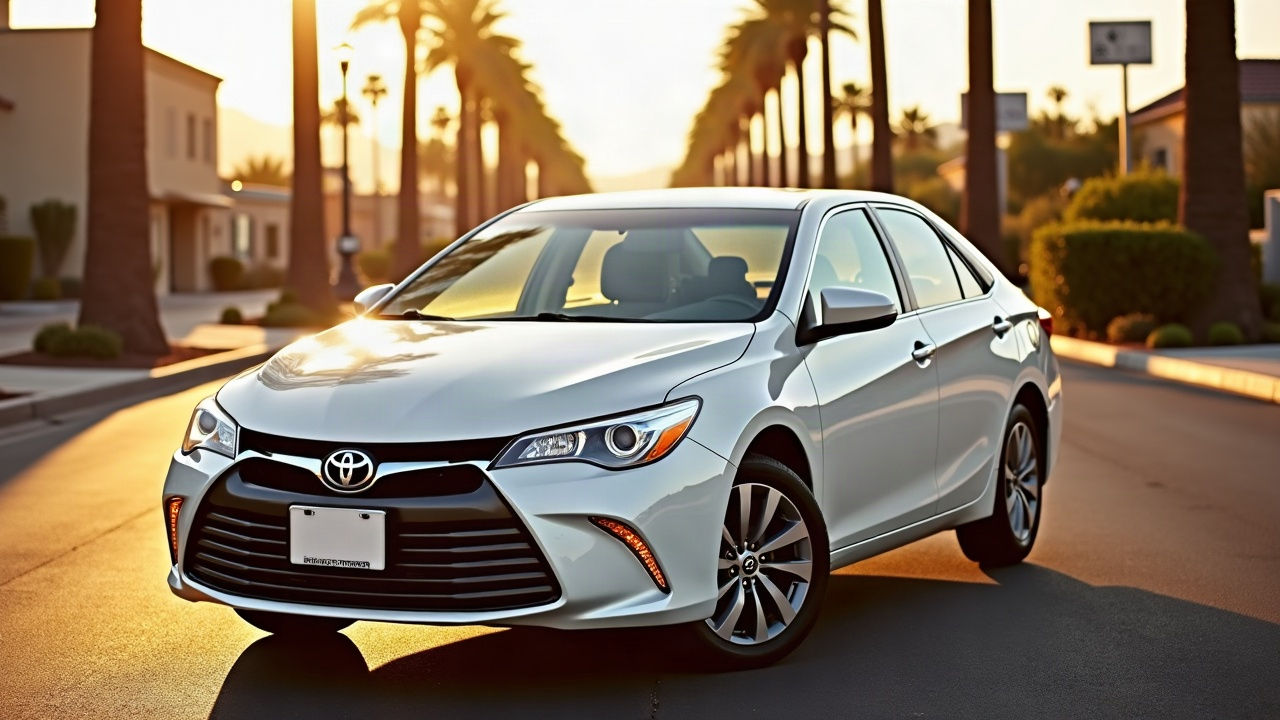
Seven checks on a used Camry Hybrid — SOC bar behavior, block voltages, cooling filter, readiness monitors — and what the pack costs in Phoenix heat.
A used Camry Hybrid needs seven specific battery checks before you hand over money, and all seven can be done in about 30 minutes with a scan tool and a test drive. Healthy Hybrid replaces high-voltage hybrid batteries — the traction pack under or behind the rear seat, not the 12-volt — and the Camrys that come to us in Phoenix almost always showed warning signs the buyer could have caught.
Here is what to look at, in order.
1. Which pack is actually in the car?
The answer changes by model year and, from 2018 on, by trim.
| Years | Pack | What it means for you |
|---|---|---|
| 2007–2011 (XV40) | Nickel-metal hydride, 245 V, 34 modules, trunk-mounted | Oldest packs on the road; most common replacement we see |
| 2012–2017 (XV50) | Nickel-metal hydride, 245 V, behind rear seat | Mid-life in Arizona; many are now 10+ years old |
| 2018–2024 LE (XV70) | Lithium-ion | Different diagnostics, different failure pattern |
| 2018–2024 SE / XLE (XV70) | Nickel-metal hydride | Heavier pack, same heat exposure |
Ask the seller the trim, not just the year. A 2019 LE and a 2019 XLE do not have the same battery. Model-specific details are on our Toyota Camry Hybrid page.
2. What should the SOC bars do on the test drive?
Start the car cold if you can — ask the seller not to warm it up. Then watch the state-of-charge display on the energy screen for at least 20 minutes of mixed driving.
A healthy Camry Hybrid pack moves slowly. Two or three bars of swing over several miles is normal. These are the red flags:
- Bars climb two or three steps during one short regen braking event, then collapse the moment you accelerate. That is a pack with low usable capacity bouncing between its limits.
- The gauge parks itself at the top or bottom and will not move.
- The engine refuses to shut off at a stoplight once the car is fully warm.
- The engine restarts within a second or two of shutting off, over and over.
- A hard shudder when the engine starts, especially on a weak pack that cannot spin the motor-generator smoothly.
Drive it up a grade. A tired pack that looks fine on flat Phoenix streets will drop three or four bars climbing out toward Fountain Hills or up the 17.
3. Is the battery cooling fan clear?
This is the check most buyers skip and the one that matters most in Arizona. The Camry Hybrid pack is cooled by cabin air pulled through an intake near the rear seat or parcel area. There is a filter screen on that intake. Dust, pet hair, and the fine grit that gets into every car in Maricopa County clog it.
Pull the trim and look. A gray felt mat of dust means the pack has been running hotter than designed for years. Also listen: a fan screaming at high speed on a mild morning means the battery ECU is already fighting temperature.
Heat is the single biggest factor in how these packs age. A Camry that spent its life parked outside in 110-degree summers can be weaker at 120,000 miles than an identical car from Oregon at 180,000. Arizona mileage is not the same as national mileage.
4. What do the block voltages say?
The test drive tells you how it feels. The scan data tells you how long it has left. On a NiMH Camry pack, pull live block voltages and watch them under load and under regen.
Healthy blocks track together — within roughly 0.2 V of each other. One block sagging 0.4 V or more below its neighbors under acceleration, or spiking above them during charge, is an imbalanced pack. That is the condition behind the P3011 through P3024 "battery block becomes weak" codes, and it usually gets worse quickly once it starts.
If you cannot read live data yourself, a hybrid battery diagnostic before purchase is the cheapest money you will spend on the car.
5. Were the codes cleared this morning?
Sellers clear codes. The tell is the readiness monitors — if they show "not ready" or "incomplete," the ECU memory was wiped recently and the car has not been driven enough to re-run its self-tests. Treat that as a battery warning until proven otherwise.
Also check for pending codes, not just stored ones. P0A80 — replace hybrid battery pack is the end of the road, but P0A7F and the block codes usually show up first.
6. What does the service history actually show?
Ask for paperwork, not claims. "The battery was replaced" means nothing without a receipt showing who did it, when, and what warranty came with it. If a pack was replaced, ask whether that warranty transfers — ours transfers once, with the bill of sale, within 30 days of the sale.
Check the 12-volt battery too. A weak 12V on a Camry Hybrid causes false warning lights, no-start conditions, and strange hybrid system messages that get blamed on the traction pack. We replace 12V batteries for $100 to $400, and a quick 12V versus hybrid battery test separates the two problems before you assume the worst.
7. How much coverage is left, and what does a replacement cost?
Toyota's own hybrid battery coverage is 8 years / 100,000 miles on model years through 2019, and 10 years / 150,000 miles from 2020 on. That is the manufacturer's warranty, not ours. Most used Camry Hybrids on Arizona lots are already past it.
So price the worst case into your offer. Camry Hybrid high-voltage battery replacement is priced per vehicle rather than at a single flat figure — contact us and we'll let you know for your year and trim, or see the published figures on our pricing page. Installation is $250 at our Phoenix shop, and if you'd rather we come to the car it's a $250 add-on on top of that. Most installs take about 30 minutes. New nickel-plated bus bars with stainless nuts are $99 if you want the connections renewed at the same time.
If you're looking at a Camry Hybrid anywhere in the Phoenix metro, book a pre-purchase hybrid battery diagnostic or call Healthy Hybrid at 833-995-7966 and we'll tell you what the pack is actually doing before you buy it.